Realistic Model
Participatory making sessions. In development, 2025.
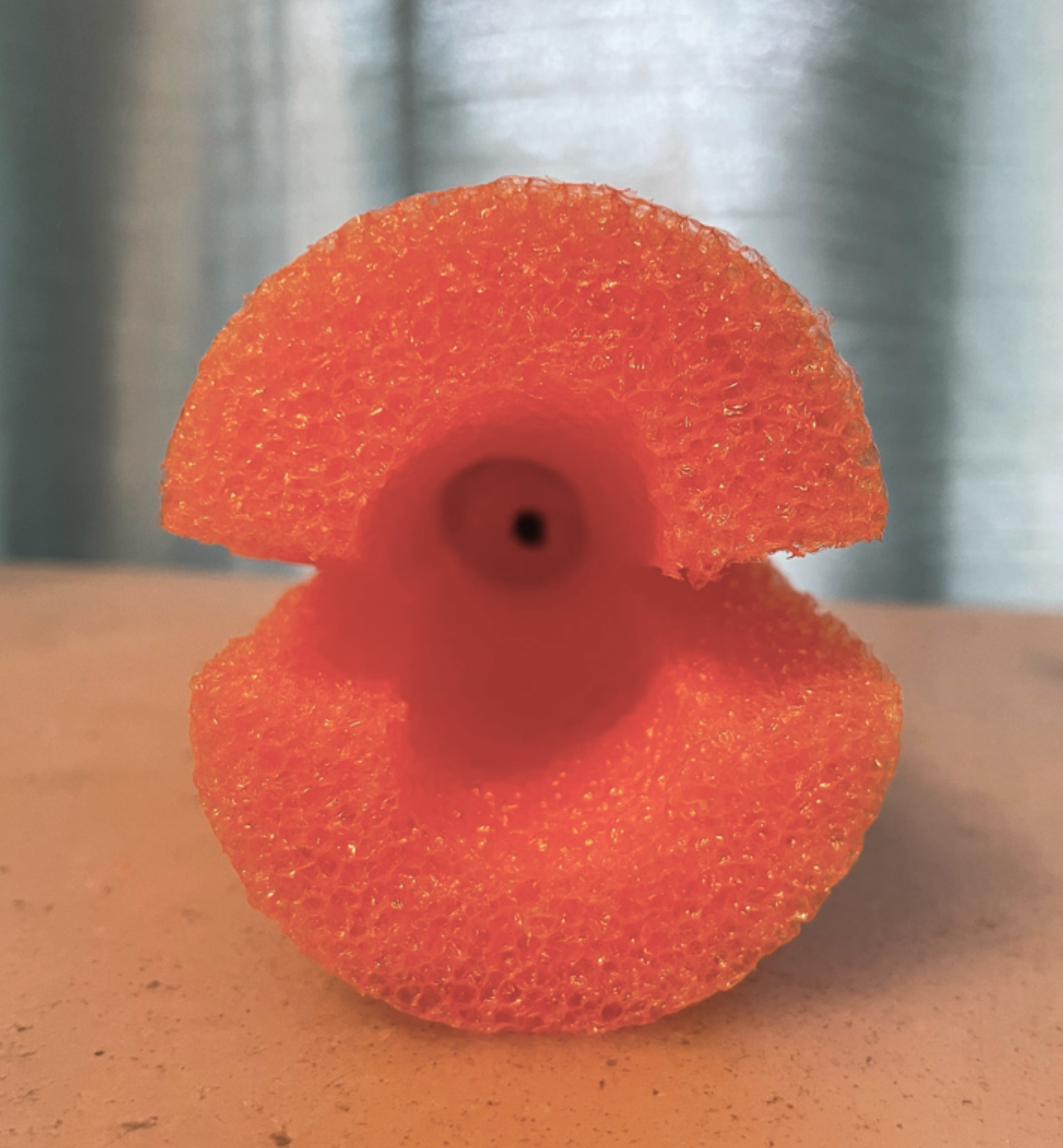
In 2023, a team of emergency medicine physicians published open-access instructions for building a pelvic exam simulation model from dollar store materials: pool noodles, cosmetic sponges, rubber bands, felt, energy drink cans, a cardboard box, a hot glue gun. The model costs under twenty dollars and outperformed commercial simulators in a clinical study. The paper was written for clinicians. This project is for the people on the other side of the speculum.
Realistic Model is a series of participatory making sessions in which people build this anatomy with their hands. The build takes about two hours. Participants cut a pool noodle to form a vaginal canal, shape a cosmetic sponge into a cervix, measure an opening, glue felt over a cardboard pelvis and mark it with color. Everyone who enters already knows something about this anatomy, through health class, clinical encounters, personal exploration, or what they were told. Some of that knowledge is accurate. Some is partial or inherited through shame. The making adds a different register: tactile, slow, built through handling rather than instruction.
What does it mean for a teenager to build this before a first exam? For a postpartum mother to reconstruct, in foam and felt, a body she experienced from the other side of the stirrups? For a trans woman to assemble an anatomy she may or may not claim? For a man to sit with these materials for two hours, building what he has never been asked to understand from the inside?
Sessions are structured by group and built on informed consent at every stage. Where appropriate, they incorporate trauma-informed pelvic care education, drawing on “Pelvic Exams Don’t Have to Hurt” initiative. The encounter is voluntary, paced, and conducted with participants’ own hands rather than someone else’s.
Project inspiration and photo source:
Godsey J, Kott I, Payden A, Ward P. A Homemade, Cost-Effective, Realistic Pelvic Exam Model. J Educ Teach Emerg Med. 2023 Jul 31;8(3):I1-I9. doi: 10.21980/J8HM0F. PMID: 37575410; PMCID: PMC10414979.