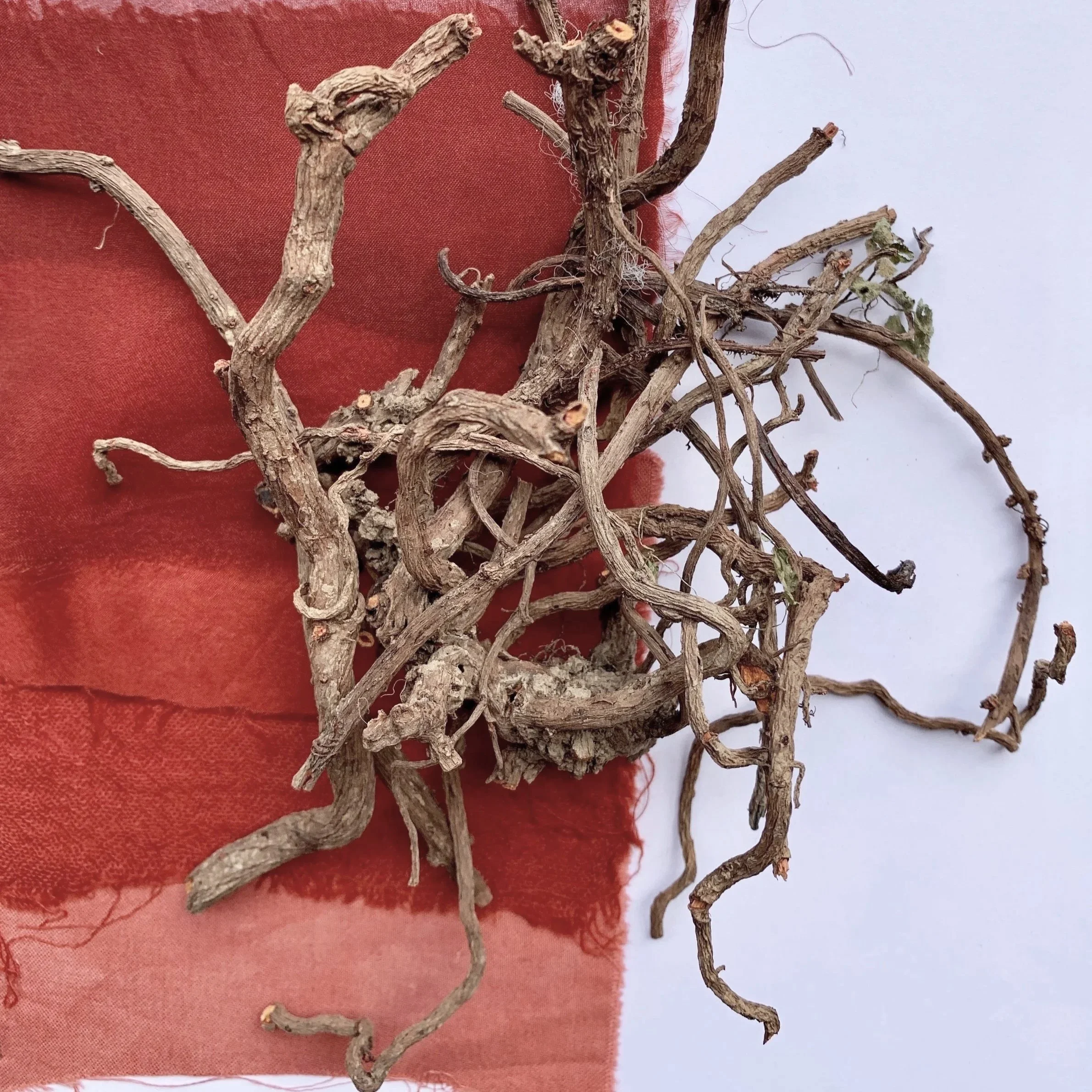
The Color of Reproduction
Material and archival research, 2022.
What does it mean that the same plants appear in dye manuals and in gynecological texts, that color-making and reproductive management shared a material archive? This work traces that overlap through traditional dye plants — tansy, pomegranate skins, madder root — that were also used historically for fertility support, birth control, and reproductive health.
Nicholas Culpeper, writing in 1653, recommends madder, a traditional dye plant for red, as an emmenagogue to stimulate menstruation. An older example reaches further back: the Hippocratic treatise On the Nature of Women gives a cure for amenorrhea with a recipe identical to the natural dye bath of pomegranate skins, oak galls, and alum used to fix yellow to cloth. The dye and the medicine are one preparation, copied into different archives.
This specificity of color-making is a subtle nod to the current U.S. socio-political climate in which access to abortion services has been severely limited. The use of abortifacient herbs and plants that promote reproductive health highlights symbols of reproductive agency that have always been present, hiding in plain sight.